Watch a New Sport Without Knowing All the Rules
Watch a new sport without learning every rule first: follow its scoring, pauses and flow to make sense of the match as you watch.
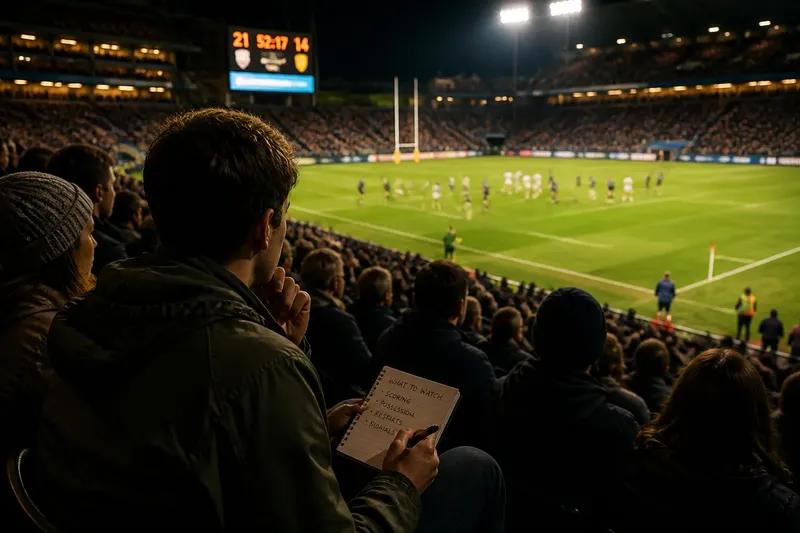
You can watch a new sport without knowing all the rules. At your first match, learn the basic aim and watch how scoring happens; leave rare rulings for later. That gives you a way to follow the contest without turning the event into a revision session.
What should you learn before the match?
Find out what each side is trying to do and what counts as a score. The venue’s visitor information, a short rules guide from the sport’s governing body, or a companion can answer those basics. You do not need to memorise every restart or penalty.
Before play begins, identify the teams or competitors and the direction each side is trying to move. Notice the scoreboard and any visible boundary lines. These landmarks help you orient yourself when the action moves quickly.
It is fine not to understand a call straight away. Keep watching, note what you saw and return to the question during a break. An unfamiliar moment is a useful prompt, not a reason to stop following the match.
How can you follow the flow of an unfamiliar sport?
Use the score, changes in possession and stoppages as landmarks. After a score, notice how play resumes. When the ball or other object changes sides, see where the new attack begins. At a pause, look for the official’s signal and which side gets the next opportunity.
Different sports have different rhythms. In tennis, a point ends and the next serve begins. In football, possession may shift while play continues, or a stoppage may lead to a restart. In cricket, the end of a delivery creates a natural moment to see where the next one will be played.
You do not need to judge who is playing well. Instead, ask what changed: did one side score, gain possession, move closer to its target or force a pause? Those changes make the contest easier to follow without specialist terms.
What questions help you understand a match?
How do I know what counts as a score?
Check the event guide or ask a companion how scoring is signalled. Then watch for that signal and notice what happened immediately before it.
What should I watch when the action moves quickly?
Use a fixed landmark such as the scoreboard, a boundary line or the area where play restarts. If you lose track of the action, look there and pick up the next phase.
Should I look up a rule during play?
Save detailed searches for a break unless the answer is needed to understand what is happening now. A note about the moment or the official’s signal will make it easier to find the relevant rule later.
What if the official’s signal is unclear?
Watch which side resumes play and where the restart occurs, but do not assume that this reveals the full reason for the call. Ask a companion or check a reliable rules guide after the moment has passed.
How can you check an unclear call?
Start with the exact moment rather than a broad question about the whole sport. Note what happened just before the pause, the official’s signal and what followed. Then ask a companion, consult the event’s rules guide or look up the governing body’s explanation of that call.
Say you are watching volleyball for the first time. A serve lands near the back line, the official signals and play stops; you note the landing spot and the signal, then ask your companion during the next break why the point ended. They explain the call using that moment, and you can return to watching without trying to memorise unrelated rules.
If the explanation remains unclear, keep the question for later rather than guessing. A signal can be difficult to see from some seats, and the same pause may have more than one possible cause.
What is worth preparing, and what is not?
A quick check of the sport’s basic aim and scoring can make the first few minutes easier to follow. It is not worth spending the evening learning every official signal, tactical term and rare exception before you have seen how the match works. A long rulebook is more useful when you have a specific question to answer.
- Check the basic aim of play; if it is clear, watch how each side tries to reach it, but if it is not, ask for a plain-language explanation before play.
- Check how scoring is signalled; if you can recognise it, use scores as landmarks, but if you cannot, look at the event guide or ask a companion.
- Check where the boundaries are; if you can see them, use them to orient yourself, but if your view is blocked, follow the scoreboard or the restart area instead.
- Check which side has possession or the next turn; if you can tell, follow that side’s attempt, but if you cannot, wait for the next clear restart rather than guessing.
- Check the official’s signal at a stoppage; if it is visible, note it for a later question, but if it is not, watch who resumes play and ask someone afterwards.
- Check whether the basic guide answers a rule question tied to a moment you saw; if it does, connect the answer to that moment, but if it does not, keep the question and consult a governing-body rules guide later.
Watching a new sport without knowing all the rules is easier when you use scoring, possession and restarts as landmarks. Once those make sense, choose one unfamiliar call to look up after the match; a clear answer to a real moment is more useful than a list of rules you have not yet seen in play.