Borrow, Hire, or Buy? Choosing Equipment for a First Try
Choosing equipment for a first try is easier when you weigh likely repeat use, fit and storage against the effort of returning borrowed or hired kit.
Choosing equipment for a first try is mostly a question of what happens after the session: will you use it again, can it fit you properly, and where will it go? Borrowing, hiring and buying each solve a different problem. Decide on those three points before browsing, and you are less likely to end up with kit that is awkward to return or left in a cupboard.
When does borrowing make sense?
Borrowing suits a one-off introduction, a taster session or an activity where you are still learning what equipment feels right. A friend, club or community group may have suitable kit available, often with someone nearby who can explain how it is adjusted or carried. That can make the first session simpler without committing you to a purchase.
Check the arrangement before you take anything away. Ask who owns the item, when it needs to come back, whether it must be cleaned, and what to do if a component is missing. For a friend’s equipment, agree on the return day rather than relying on a vague promise to give it back soon. If the kit is shared through a club, follow its sign-out process.
Fit is the main reason not to accept a borrowed item automatically. A helmet, racquet, pair of skates or set of clubs may feel wrong if its size or adjustment does not suit you. Ask the session leader to check the fit before you begin, and speak up if the item shifts, pinches or makes ordinary movement difficult. Do not assume that a quick adjustment makes every item suitable.
Borrowing is less attractive if you would need to travel across town to collect and return bulky equipment, or if the owner needs it back immediately after your session. In that case, a hire arrangement at the venue may be easier, even if borrowing costs nothing.
What does hiring add?
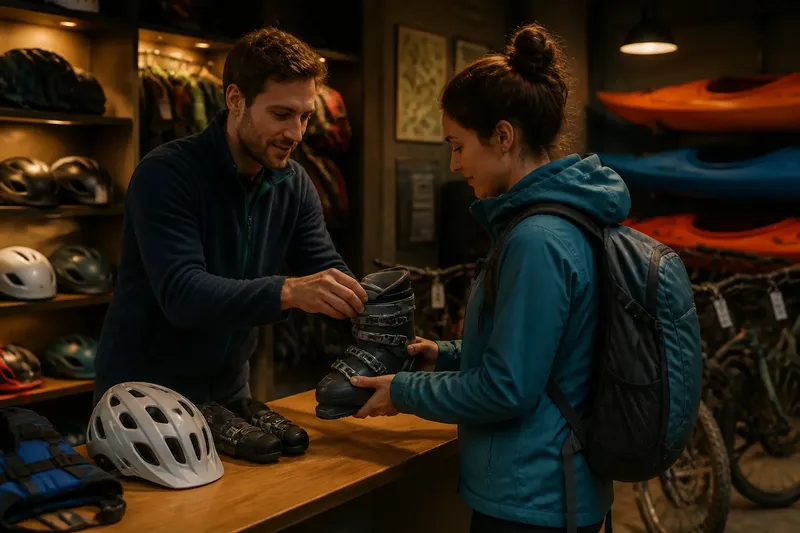
Hiring is a useful middle course when you want equipment for a session or short run of sessions but do not know whether you will continue. The venue or hire shop handles storage, and you avoid finding a home for a large item such as a kayak, set of skis or cricket kit. Depending on the provider, you may also be able to choose from several sizes or styles.
Ask what the hire includes. A bicycle hire may include a helmet or lock, while another arrangement may cover the bicycle alone. Check the collection point, return deadline, cleaning expectations and whether you need to reserve a particular size. Confirm which accessories you should bring yourself, such as suitable clothing or footwear.
The trade-off is less control over the exact item and the condition it arrives in. Allow a little time before the activity to check that all expected parts are present and that the equipment feels appropriate. If a strap, fastening or adjustment seems damaged or uncertain, stop and ask the provider or session leader for help rather than trying to make an improvised repair.
Hiring also has a practical limit: repeated collections and returns can become a chore. If the activity is becoming part of your regular routine, compare that inconvenience with keeping your own kit. The answer may still be to hire if storage is difficult or your needs change between sessions.
When is buying the sensible choice?
Buying makes more sense when you expect to use the equipment regularly, know what kind suits you, and have somewhere to keep it. Your own item is available when you need it, and you can become familiar with its fit and adjustments. That familiarity may be useful in activities where a consistent grip, feel or set-up helps you settle into practice.
It is easy to buy too early because a new activity makes every item seem essential. Start by asking the coach or organiser what participants actually need for the next session. Some sports provide specialist equipment at the venue, while others expect you to bring only a few basics. Check whether the item you are considering is compatible with the activity and any equipment you already have.
Consider the full burden of ownership, not just the moment of purchase. A large item may need dry storage, cleaning or transport; small accessories can be easy to misplace. If you are unsure about fit, try different sizes or models in person where possible, and ask a knowledgeable staff member to explain the differences without pressure to buy extras. Buy only what has a clear role in the sessions you plan to attend.
How should you decide between borrowing, hiring and buying?
Use these questions in order. They focus on the practical differences between the options rather than on the appeal of owning new kit.
- How often do I expect to use it? For one session, borrow or hire. If you plan to return regularly, consider ownership once you know what works for you.
- Does fit affect comfort or control? If it does, ask for a fitting or adjustment before committing. Choose an option that lets you check suitability before the activity begins.
- Can I store and transport it? If not, venue hire may be easier than bringing an item home. A compact item may be manageable where bulky equipment is not.
- How easy is it to return? A nearby hire desk or a clear club loan process can be convenient. A distant collection point or uncertain return arrangement may change the balance.
- Do I know which version I need? If the answer is no, borrow or hire first and ask the instructor what features matter for your activity.
Say you want to try indoor climbing and the centre hires shoes, while a friend offers a pair that looks close to your size. If you expect only one visit and can collect the friend’s shoes easily, borrowing may be convenient, but only if staff confirm the fit is suitable. If the fit is uncertain, hiring at the centre lets you ask for another size on arrival; buying can wait until you know you want to climb again.
What should you ask before choosing?
Can I borrow sports equipment from a club?
Many clubs have shared equipment, but availability and loan rules vary. Ask the organiser what can be borrowed, whether it must stay on site, and how to reserve it for your session.
Is hired equipment suitable for a beginner?
It can be, particularly when the provider offers guidance on size and adjustment. Tell staff that you are new and ask them to check the item before you use it.
When should I buy my own equipment?
Buy once you have a realistic idea of repeat use, preferred fit and storage needs. Ask a coach or experienced staff member which features matter for your activity, then compare options against that advice.
What if the equipment does not fit?
Do not try to make an uncomfortable item work by tightening or altering it beyond its intended adjustments. Pause and ask the lender, hire provider or session leader for another option.
Before deciding, check the owner’s or provider’s instructions and the organiser’s requirements; these can differ by item and activity. A little confirmation now is more useful than guessing about fit or return arrangements later.
For a first try, choosing equipment is not a commitment to the sport. Borrow when access is simple, hire when fit or storage is uncertain, and buy when repeat use is clear. If you are still undecided, ask the organiser what is available at the venue and attend with the smallest practical commitment.